

2027 JAMB UTME Updated Music Syllabus
Preparing for the Unified Tertiary Matriculation Examination (UTME) conducted by the Joint Admissions and Matriculation Board (JAMB) requires more than casual reading; it demands laser-focused preparation guided by the official curriculum. For candidates aspiring to study Music, Theatre Arts, Performing Arts, or Creative Arts in Nigerian tertiary institutions, mastering the JAMB Music Syllabus is the single most reliable pathway to scoring 300 and above.
At Otobor, we understand how overwhelming it can feel to navigate music theory, Western music history, and indigenous African musical traditions without a clear roadmap. Whether you are a self-taught instrumentalist, a church chorister, or a secondary school graduate who took Music at the O’Level (WAEC/NECO), this comprehensive guide breaks down every section of the JAMB Music Syllabus, provides direct insights into how JAMB sets its questions, lists the best Nigerian universities offering Music, and gives you actionable strategies to excel.
“Music is the universal language of mankind, yet in the UTME examination hall, fluency in that language requires mastering both the mathematical precision of Western staff notation and the rich oral heritage of African rhythm.” — Otobor Academic Editorial Team
Overview of the JAMB Music Syllabus & Exam Structure

The Joint Admissions and Matriculation Board (JAMB) designs the Music syllabus to evaluate whether prospective undergraduates possess the foundational theoretical, historical, and analytical competencies required for degree-level musicology, performance, music technology, or music education.
Unlike practical music examinations conducted by bodies such as ABRSM (Associated Board of the Royal Schools of Music) or MUSON (Musical Society of Nigeria), the UTME is strictly a Computer-Based Test (CBT). However, do not mistake a computer-based exam for an easy theory test. JAMB examiners embed musical staves, key signatures, triads, and rhythmic bars directly onto your computer screen as graphic images, asking you to transpose melodies, identify cadential progressions, or spot enharmonic equivalents under strict time pressure.
Aims and Objectives of the Syllabus
According to the official JAMB curriculum framework, candidates who thoroughly study this syllabus should be able to:
Appreciate and discuss music fairly and critically using appropriate musical terminology.
Identify and analyze the structural features of both African (specifically Nigerian) and Western musical idioms.
Demonstrate fluency in basic music theory, including staff notation, tonic sol-fa translation, scales, intervals, time signatures, and elementary four-part harmony.
Trace the historical evolution of musical styles, instruments, and prominent composers across Africa and Europe.
Recognize the socio-cultural roles of music in traditional African societies, contemporary popular genres, and global fusion movements.
Detailed Breakdown of the JAMB Music Syllabus (Sections A to E)
To help you plan your reading timetable systematically, Otobor has broken down all five sections of the JAMB Music Syllabus, highlighting the exact sub-topics and what JAMB examiners expect you to master in each area.
Section A: Rudiments of Music
Section A forms the bedrock of the entire examination. If you miss questions here, surviving Section B becomes nearly impossible. You must be able to read both treble (G) clef and bass (F) clef effortlessly, as well as understand the alto and tenor C clefs at an introductory level.
1. The Staff and Pitch Notation
The Great Staff (Grand Staff): Understanding the 11-line system combining treble and bass staves joined by Middle C.
Ledger Lines: Reading notes up to four ledger lines above and below the treble and bass staves.
Accidentals: Exact functions of sharp (♯\sharp), flat (♭\flat), natural (♮\natural), double sharp (×\times), and double flat (♭♭\flat\flat).
Enharmonic Equivalents: Identifying notes that sound identical on a keyboard but are written differently (e.g., F♯F\sharp and G♭G\flat, or B♯B\sharp and CC).
2. Rhythm, Time Signatures, and Grouping of Notes
Note Values and Rests: From the breve (double whole note) down to the hemidemisemiquaver (64th note), including dotted notes, double-dotted notes, and ties.
Simple vs. Compound Time:
Simple Duple, Triple, Quadruple: 24,34,44\frac{2}{4}, \frac{3}{4}, \frac{4}{4} (Common Time CC), 22\frac{2}{2} (Alla Breve C\mathbb{C}), 38\frac{3}{8}.
Compound Duple, Triple, Quadruple: 68,98,128,64\frac{6}{8}, \frac{9}{8}, \frac{12}{8}, \frac{6}{4}.
Irregular Time Signatures: Basic recognition of 54,58,78\frac{5}{4}, \frac{5}{8}, \frac{7}{8}.
Syncopation and Triplets/Duplets: Proper beaming and grouping of notes within bars according to beat subdivisions.
3. Scales and Key Signatures
Diatonic Major Scales: Construction using the tone-semitone formula (T−T−S−T−T−T−ST-T-S-T-T-T-S) up to 7 sharps and 7 flats.
Minor Scales: Master all three forms—Natural Minor, Harmonic Minor (raised 7th degree), and Melodic Minor (raised 6th and 7th ascending, natural descending).
Relative and Parallel Keys: Finding the relative minor of any major key (counting down three semitones or to the 6th degree) and vice versa.
Other Scale Types: Chromatic scale, Pentatonic scale (crucial for African folk music), and Whole-tone scale.
4. Intervals and Transposition
Quality and Quantity of Intervals: Identifying Major, Minor, Perfect, Augmented, and Diminished intervals within an octave, plus compound intervals (9ths, 10ths, etc.).
Inversion of Intervals: Remembering the Rule of 9 (a 2nd inverts to a 7th; a 3rd to a 6th; Major becomes Minor; Augmented becomes Diminished; Perfect remains Perfect).
Transposition: Transposing a short melody up or down by a major 2nd, minor 3rd, perfect 4th, perfect 5th, or an octave—including transposing for orchestral instruments like the B-flat Clarinet or F Horn.
5. Tonic Sol-fa and Musical Terms
Staff to Sol-fa Conversion: Translating simple melodies in major and minor keys between staff notation and tonic sol-fa (d,r,m,f,s,l,t,d′d, r, m, f, s, l, t, d’).
Italian, French, and German Musical Terms: Tempo markings (Adagio, Andante, Allegro, Presto, Rallentando, Accelerando), dynamics (pianissimo, mezzo-forte, sforzando, crescendo), and articulation/expression marks (staccato, legato, marcato, da capo, dal segno).
Section B: Elementary Harmony
Once you understand intervals and scales, Section B tests how notes combine vertically to create harmony and horizontally to form smooth chord progressions.
1. Triads and Seventh Chords
Primary Triads: Tonic (II), Subdominant (IVIV), and Dominant (VV) in both major and minor keys.
Secondary Triads: Supertonic (iiii), Mediant (iiiiii), Submediant (vivi), and Leading-tone (vii∘vii^\circ).
Chord Inversions:
Root Position (53\frac{5}{3} or aa)
First Inversion (63\frac{6}{3} or bb)
Second Inversion (64\frac{6}{4} or cc)
Dominant Seventh Chord (V7V^7): Identification in root position and inversions (V7a,V7b,V7c,V7dV^7a, V^7b, V^7c, V^7d) and its natural resolution to the tonic (II).
2. Cadences (Musical Punctuation)
JAMB almost always sets 2 to 4 questions directly on identifying cadences from a four-part score or Roman numeral sequence:
3. Four-Part Voice Leading Rules & Non-Harmonic Tones
Vocal Ranges: Soprano, Alto, Tenor, Bass (SATB).
Forbidden Motions: Recognizing consecutive (parallel) fifths, consecutive octaves, hidden octaves, and voice overlapping.
Non-Chord Tones: Identifying passing notes, auxiliary (neighbor) notes, anticipations, and suspensions.
Modulation: Recognizing simple modulations from a tonic key to its Dominant, Subdominant, or Relative Major/Minor.
Section C: History and Literature of African Music
This section celebrates indigenous musical heritage, with heavy emphasis on Nigerian traditional music and the pioneers of Nigerian Art Music.
1. Classification of African Musical Instruments (Sachs-Hornbostel System)
JAMB expects you to classify Nigerian instruments accurately into four scientific categories:
Idiophones (Self-sounding instruments): Produce sound through the vibration of their own solid body without strings or membranes.
Examples: Ogene (Igbo metal gong), Agogo (Yoruba iron bell), Udu (Igbo clay pot drum), Sekere (beaded gourd rattle), Ekwe (slit wooden drum), Mbira / Sansa (thumb piano).
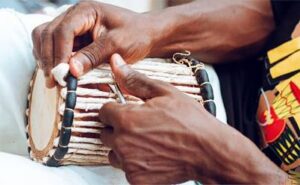
Membranophones (Skin drums): Produce sound via stretched animal skin/membrane struck by hands or sticks.
Examples: Dundun / Gangan (Yoruba hourglass talking drum), Bata (conical double-headed Yoruba drum), Igba (Igbo cylindrical drum), Kalangu (Hausa talking drum), Tambari (Hausa royal kettle drum).
Chordophones (Stringed instruments): Produce sound through vibrating strings stretched between two points.
Examples: Goje (Hausa single-stringed fiddle), Molo (Hausa lute), Une (Igbo musical bow), Kora (West African 21-string bridge-harp).
Aerophones (Wind instruments): Produce sound via a vibrating column of air.
Examples: Kakaki (long Hausa royal metal trumpet), Algaita (Hausa double-reed oboe), Oja (Igbo notched wooden flute), Opi (Igbo animal horn), Tioko (Yoruba flute).
2. Features and Social Functions of African Traditional Music
Structural Characteristics: Polyrhythm (multiple conflicting rhythms played simultaneously), Call-and-Response (Antiphonal) vocal form, Ostinato (repeated melodic/rhythmic motifs), Tonal inflection (melody following the tonal contour of spoken African languages), and Improvisation.
Occasional & Functional Roles: Music for birth/naming ceremonies, initiation rites, royal coronations, agricultural festivals (e.g., New Yam Festival), healing/spirit possession, warfare, and funeral dirges.
3. Pioneers of Nigerian Art Music (Academic Composers)
You must know the biographies, stylistic contributions, and major works of these Nigerian musicologists and composers:
Fela Sowande (1905–1987): Widely regarded as the Father of Modern Nigerian Art Music. Famous for his orchestral masterpiece African Suite (featuring the movement “Akinla”) and Folk Symphony.
Ayo Bankole (1935–1976): Renowned organist and composer who fused Yoruba folk idioms with Western chromaticism. Known for Three Yoruba Songs, Toccata and Fugue, and Festac Cantata.
Akin Euba (1935–2020): Coined the concept of African Pianism (treating the Western piano like a set of African percussion instruments). Famous for Chaka (an opera) and Scenes from Traditional Life.
Laz Ekwueme (born 1936): Celebrated choral composer, conductor, and musicologist. Famous for Nwa Nwa, Obi Dimkpa, and scholarly writings on Igbo choral music.
Samuel Akpabot (1932–2000): Known for Overture for a Nigerian Ballet, Scenes from Nigeria, and his foundational textbook Foundation of Nigerian Traditional Music.
Joshua Uzoigwe (1946–2005): Famous for Ukom (piano compositions modeled after Igbo tuned drums) and Ritual Procession.
Wilberforce Echezona (1926–1987): First Nigerian to earn a PhD in Music; pioneered music education at the University of Nigeria, Nsukka (UNN).
T.K.E. Phillips (1884–1969): Organist at Cathedral Church of Christ, Marina, Lagos; mentored Fela Sowande and Ayo Bankole; composed Emi O Gbe Oju Mi Soke Wonni.
Section D: History and Literature of Western Music
This section traces European classical music from the Middle Ages to the 20th Century. Focus on dates, defining stylistic traits, musical forms, and key composers.
1. Historical Eras of Western Music
Other related posts
2. Essential Western Musical Forms to Memorize
Binary Form (ABAB): Two contrasting sections, often repeated (AABBAABB), typical in Baroque dance suites.
Ternary Form (ABAABA): Statement, contrast, and return of the opening section (e.g., Da Capo Aria, Minuet and Trio).
Rondo Form (ABACADAABACADA): Principal refrain (AA) alternates with contrasting episodes (B,C,DB, C, D).
Sonata-Allegro Form: Used in the first movement of Classical symphonies and sonatas; consists of Exposition (First Subject in tonic, Second Subject in dominant), Development, and Recapitulation (both subjects in tonic).
Fugue: Contrapuntal composition built on a single theme (Subject) introduced in imitation across voices, answered by the Answer and Countersubject.
Section E: Comparative Music Studies
Section E bridges global black musical traditions and contemporary Nigerian genres, testing how African rhythms evolved across the Atlantic and within modern Nigeria.
Nigerian Popular Music Genres:
Highlife: Bobby Benson, Victor Olaiya, Rex Jim Lawson, Osita Osadebe, Celestine Ukwu.
Juju Music: Tunde King, I.K. Dairo, King Sunny Ade, Chief Commander Ebenezer Obey.
Fuji & Apala: Haruna Ishola (Apala), Ayinla Omowura (Apala), Sikiru Ayinde Barrister (Fuji), Ayinde Wasiu Marshall (KWAM 1).
Afrobeat & Contemporary Afrobeats: Fela Anikulapo-Kuti (creator of Afrobeat), Femi Kuti, Lagbaja, alongside modern global icons like Burna Boy, Wizkid, and Davido.
African Diaspora Music:
Spirituals & Gospel: Fisk Jubilee Singers, Mahalia Jackson, Thomas A. Dorsey.
Blues & Jazz: W.C. Handy, Louis Armstrong, Duke Ellington, Miles Davis, Charlie Parker.
Reggae, Calypso & Salsa: Bob Marley, Jimmy Cliff, Mighty Sparrow.
Music Technology & Media: Basic understanding of microphones, synthesizers, Digital Audio Workstations (DAWs), copyright laws in Nigeria (COSON, MCSN), and music broadcasting.
Download Updated Music Syllabus
JAMB Subject Combination & O’Level Requirements for Music

Even if you score 90 in JAMB Music, you cannot gain admission into a Nigerian university without the correct UTME subject combination and O’Level credits.
Mandatory UTME Subject Combination
Use of English (Compulsory for all UTME candidates)
Music (Core subject)
Literature-in-English (Highly recommended)
Any other Arts or Social Science subject (e.g., Christian Religious Studies (CRS), Islamic Studies (IRS), Government, History, Fine Arts, or French).
O’Level (WAEC / NECO / NABTEB) Requirements
Five (5) credit passes in not more than two sittings, including English Language, Music, and three other Arts/Social Science subjects.
Important Note for Candidates Without O’Level Music: Several Nigerian universities (such as UNN, OAU, and UI) accept candidates who do not have Music at WAEC/NECO level, provided they pass an internal Departmental Audition / Practical Aptitude Test or hold at least an ABRSM Grade 3–5 Theory/Practical certificate. Always verify specific institutional waivers before locking in your choice!
Top Nigerian Universities Offering Music & Their Locations
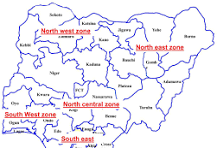
Choosing the right university matters just as much as passing the exam. Below is a curated table of premier Nigerian institutions renowned for their Music departments, alongside their exact locations and academic strengths.
JAMB Recommended Textbooks for Music

Studying random internet notes will leave dangerous gaps in your preparation. JAMB explicitly recommends the following authoritative texts from which exam questions are frequently drawn:
Akpabot, S. E. (1986): Foundation of Nigerian Traditional Music, Ibadan: Spectrum Books.
Associated Board of the Royal Schools of Music (ABRSM): Rudiments and Theory of Music, London: ABRSM Publishing.
Baines, A. (1961): Musical Instruments Through the Ages, London: Penguin Books.
Cole, W. (1969): The Form of Music, London: The Associated Board of the Royal Schools of Music.
Echezona, W. W. C. (1981): Nigerian Musical Instruments, Enugu: Apollo Publishing Ltd.
Ekwueme, L. (1993): Choir Training and Choral Conducting for Africans, Lagos: Lenaus Advertising and Publishing Company.
Holst, I. (1963): An ABC of Music, Oxford: Oxford University Press.
Kamien, R. (1990): Music: An Appreciation, New York: McGraw-Hill.
Karolyi, O. (1965): Introducing Music, London: Penguin Books.
Machlis, J. (1977): The Enjoyment of Music, New York: W.W. Norton.
Mensah, A. A.: Folksongs for Schools, Accra: Ghana Publishing Corporation.
Nketia, J. H. K. (1974): The Music of Africa, New York: W.W. Norton.
Taylor, E. (1989): The AB Guide to Music Theory (Parts I & II), London: ABRSM Publishing.
Warburton, A. O. (1955): Graded Music Course for Schools (Books I – III), London: Longman.
Proven Study Strategies to Score 80+ in JAMB Music

Having the syllabus is step one; turning it into a high UTME score requires smart execution. Apply these battle-tested study habits recommended by Otobor educators:
Draw a Keyboard on Your Rough Sheet: During the CBT exam, you are provided with an erasable slate or rough paper. Immediately sketch two octaves of a piano keyboard (showing all white and black keys) before answering Section A and B questions. This visual reference eliminates guesswork when counting semitones for intervals, scales, and chord inversions!
Create Flashcards for Nigerian Composers & Instruments: Make a two-column flashcard deck pairing every Nigerian traditional instrument with its ethnic group and Hornbostel-Sachs class (e.g., Kakaki →\rightarrow Hausa →\rightarrow Aerophone; Udu →\rightarrow Igbo →\rightarrow Idiophone), and pair every Nigerian art composer with at least three major compositions.
Practice Sight-Singing Melodies Silently: When given a staff notation excerpt to identify a folk song or cadence, hum the intervals mentally using tonic sol-fa (d,r,m,f,s,l,t,d′d, r, m, f, s, l, t, d’). Many JAMB melody-identification questions feature familiar Nigerian folk tunes or Christmas carols written in staff notation!
Solve at Least 15 Years of JAMB Music Past Questions: JAMB frequently recycles question structures—especially on cadences, Italian musical terms, Baroque vs. Classical traits, and Nigerian popular musicians.
Balance Theory with History: Do not spend 90% of your time memorizing Western composer dates while neglecting intervals and triads, or vice versa. Dedicate 3 days a week to Sections A & B (Theory/Harmony) and 3 days to Sections C, D & E (African & Western History), using the 7th day for timed 40-question CBT mock drills.