


2027 JAMB UTME Updated Accounts Syllabus
Preparing for the Unified Tertiary Matriculation Examination (UTME) in Nigeria requires a strategic approach, especially for students registered for commercial subjects like Principles of Accounts. The JAMB Principle of Accounts syllabus PDF serves as the ultimate blueprint for candidates aiming to secure admission into Nigerian universities, polytechnics, and colleges of education to study Accounting, Finance, Business Administration, and related professional disciplines.

Understanding this syllabus prevents candidates from wasting precious study time on irrelevant materials. Every topic outlined by the Joint Admissions and Matriculation Board directly influences the structure of the computer-based test (CBT) questions. Accounting is both an art and a systematic science that demands precision, a solid grasp of double-entry bookkeeping, and the ability to interpret financial statements accurately.
“Accounting is the language of business, and mastering its foundational grammar through the official syllabus is the first vital step toward academic and professional success.”
Through this comprehensive guide brought to you by Otobor, we will break down every core section of the curriculum, highlight essential study techniques, and provide actionable insights to help you excel in your upcoming examinations.
2. Core Objectives of the JAMB Principles of Accounting Examination

The primary objective of the JAMB Principles of Accounts examination is to test the candidate’s fundamental understanding of accounting concepts, principles, and procedures. Unlike theoretical subjects, accounting evaluates a student’s numerical aptitude, logical reasoning, and ability to record financial transactions systematically.
Specifically, the examination evaluates whether a candidate can:
Demonstrate a clear understanding of basic accounting terms, conventions, and concepts.
Record financial transactions accurately using the double-entry bookkeeping system.
Prepare subsidiary books, ledger accounts, and trial balances without computational errors.
Adjust financial statements for prepayments, accruals, depreciation, and bad debts.
Interpret final accounts for sole proprietorships, partnerships, and limited liability companies.
Apply basic principles of public sector accounting and handle incomplete records effectively.
Mastering these objectives requires consistent practice, adherence to standard formats, and a thorough review of past questions alongside the official syllabus document.
3. Detailed Breakdown of the JAMB Principle of Accounts Syllabus Topics
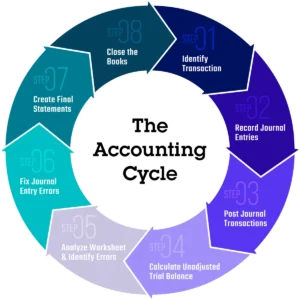
Introduction to Book-keeping and Accounting
This foundational section introduces candidates to the evolution, scope, and significance of accounting in modern business environments. Students must understand the distinction between book-keeping (the mechanical recording of transactions) and accounting (the interpretation and summarization of financial data).
Definition and Scope: Understanding the role of accounting in decision-making.
Users of Accounting Information: Identifying internal users (managers, owners) and external users (tax authorities, investors, creditors).
Qualitative Characteristics: Relevance, reliability, comparability, and understandability.
Basic Accounting Concepts: Going concern, accrual, consistency, matching, historical cost, and business entity concepts.
“An accountant must never lose sight of the fundamental principles; every debit must have a corresponding and equal credit.”
Subsidiary Books and Source Documents
In practical accounting, transactions are rarely recorded straight into the ledger. Instead, they flow through source documents into subsidiary books (books of prime entry).
Source Documents: Invoices, receipts, debit notes, credit notes, payment vouchers, and statements of account.
Subsidiary Books: Purchases journal, sales journal, purchases returns journal, sales returns journal, cash book (single, two-column, and three-column), and the petty cash book operated on the imprest system.
Ledgers and Trial Balance
Once transactions are recorded in subsidiary books, they are posted to the ledger, which serves as the master storage for all accounts.
Types of Ledgers: General ledger, sales ledger (debtors ledger), and purchases ledger (creditors ledger).
The Trial Balance: A statement of debit and credit balances extracted from the ledgers to test the arithmetical accuracy of the bookkeeping system. Candidates must understand how to identify and rectify various types of errors that do not affect the trial balance agreement (e.g., errors of commission, omission, principle, and original entry).
Trading, Profit and Loss Account, and Balance Sheet
The culmination of the accounting cycle for a sole trader involves the preparation of final accounts at the end of a financial period.
Trading Account: Calculation of gross profit by matching net sales against the cost of goods sold (opening stock + purchases + carriage inwards – returns outwards – closing stock).
Profit and Loss Account: Ascertaining net profit by accounting for operating expenses and revenues.
Balance Sheet (Statement of Financial Position): Presentation of assets (fixed and current), liabilities (long-term and short-term), and capital structure.
Adjustments: Accounting treatment for depreciation (straight-line and reducing balance methods), bad debts, provision for doubtful debts, prepayments, and accruals.
Control Accounts and Bank Reconciliation
Internal control mechanisms are vital for detecting fraud and errors in large organizations.
Control Accounts: Total debtors and total creditors control accounts used to verify the accuracy of subsidiary ledgers.
Bank Reconciliation Statements: Reconciling the cash book balance with the bank statement balance by adjusting for unpresented cheques, uncredited lodgements, bank charges, standing orders, and direct debits.
Partnership and Company Accounts
When business structures expand beyond sole proprietorships, accounting treatments change to reflect shared ownership and limited liability regulations.
Partnership Accounts: Preparation of Profit and Loss Appropriation Accounts, Partners’ Current Accounts, and Capital Accounts. Treatment of interest on capital, partner salaries, and interest on drawings.
Company Accounts: Basic understanding of authorized, issued, and called-up share capital. Distinction between ordinary shares and preference shares, along with the preparation of simple company income statements.
Public Sector Accounting and Incomplete Records
Candidates are also expected to possess basic knowledge of governmental accounting practices and situations where accounting records are haphazardly kept.
Incomplete Records: Converting single-entry records into double-entry systems, determining profit or loss from capital comparisons, and estimating missing figures using control accounts.
Public Sector Accounting: Introduction to the government accounting system in Nigeria, focusing on the Consolidated Revenue Fund, capital and recurrent expenditures, and the role of the Accountant-General and Auditor-General.
Download Updated Accounts Syllabus
4. Essential Accounting Formulas and Key Principles

To excel in the JAMB Principles of Accounts examination, memorizing and understanding core formulas is mandatory. Many CBT questions require rapid calculation of ratios and profit margins.
| Accounting Metric | Formula / Description |
| Cost of Goods Sold (COGS) | Opening Stock + Purchases + Carriage Inwards – Returns Outwards – Closing Stock |
| Gross Profit | Net Sales – Cost of Goods Sold |
| Net Profit | Gross Profit + Other Revenues – Operating Expenses |
| Working Capital | Current Assets – Current Liabilities |
| Net Book Value | Historical Cost – Accumulated Depreciation |
| Mark-up | (Gross Profit / Cost of Goods Sold) $\times 100$ |
| Margin | (Gross Profit / Net Sales) $\times 100$ |
5. Recommended Textbooks and Study Materials

Relying on authorized textbooks ensures that students study the exact curriculum standard set by JAMB. Candidates should cross-reference their reading with the following recommended titles:
Principles of Accounts for Senior Secondary Schools by L. O. Onifade.
Financial Accounting for West Africa by R. A. Kazeem.
BP Longe Principles of Accounts.
Comprehensive Certificate Accounts by Omri Adebisi.
Official JAMB Brochure and Past Questions Compilation.
6. Proven Exam Strategies for Scoring High in UTME Accounts

Scoring 80+ in JAMB Principles of Accounts requires more than just reading the textbook; it demands smart test-taking strategies tailored for a computer-based environment.
Master Time Management: In the UTME hall, time is your greatest asset. Do not spend more than a minute on a single theory calculation. If a question is too complex, flag it, move on, and return to it later.
Practice with Past Questions: JAMB frequently repeats question concepts and computational styles. Practicing at least five years of past CBT questions builds familiarity and speed.
Understand the Theory Behind the Numbers: Do not just memorize formulas. Understand why prepayments are deducted from expenses and why provisions for doubtful debts are treated as expenses in the profit and loss account.
Pay Attention to Accounting Terminology: Questions often use precise terms like “carriage inwards” versus “carriage outwards” or “discount allowed” versus “discount received.” Misinterpreting these words leads to incorrect ledger entries and wrong answers.