


2027 JAMB UTME Updated Igbo Syllabus
Preparing for the Joint Admissions and Matriculation Board (JAMB) Unified Tertiary Matriculation Examination (UTME) requires precision, strategic planning, and access to the right study materials. For candidates selecting Igbo as one of their core UTME subjects—whether for courses like Igbo Language, Linguistics, Education and Igbo, or Mass Communication—having the official JAMB Igbo PDF is non-negotiable.
At Otobor, we are committed to providing Nigerian students with accurate, up-to-date, and actionable educational resources. Many candidates lose valuable marks not because they lack fluency in spoken Igbo, but because they fail to study according to the standardized Standard Igbo (Igbo Izugbe) orthography, dialect rules, and prescribed literary texts outlined by the examination board.
“The difference between an average UTME score and an exceptional one lies in mastering the exact blueprint set by the examiners—never study blindly when the syllabus gives you the roadmap.”
What is Inside the JAMB Igbo PDF?

When you download the official JAMB Igbo PDF through Otobor or the official JAMB IBASS portal, you are getting a structured academic document designed to eliminate guesswork. Unlike random online notes, the official PDF contains:
-
General Objectives: A clear statement of the linguistic, literary, and cultural competencies candidates must demonstrate.
-
Detailed Topic Outline: Every grammatical concept, literary genre, and cultural practice eligible for testing.
-
Performance Objectives: Specific behavioral outcomes explaining what you should be able to do after studying each topic (e.g., identify vowel harmony groups, interpret proverbs in context, or analyze dramatic conflict).
-
Prescribed Literary Texts: The exact prose, drama, and poetry books selected for the current examination cycle.
-
Recommended Reference Textbooks: Authoritative grammar and culture books written by renowned Igbo linguists and scholars.
Aims and Objectives of the JAMB Igbo Syllabus


According to the official examination framework, the aim of the UTME Igbo syllabus is to prepare candidates for tertiary-level study in Igbo language, literature, and African studies. Specifically, the syllabus tests whether a candidate can:
-
Communicate Effectively in Standard Igbo: Read, write, and comprehend Igbo Izugbe using the approved 1961 Onwu Orthography.
-
Demonstrate Grammatical Competence: Identify and apply phonological, morphological, and syntactic rules governing the Igbo language.
-
Appreciate Oral and Written Literature: Analyze traditional folklore (agụmagụ ọdịnala) alongside modern prose, drama, and poetry (agụmagụ ederede).
-
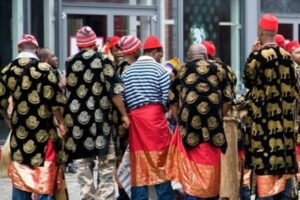
Understand Igbo Culture and Worldview: Explain traditional social institutions, festivals, title-taking, marriage rites, moral values, and contemporary societal changes affecting Alaigbo.
-
Translate and Interpret Accurately: Render passages, idiomatic expressions, and proverbs between English and Igbo without losing cultural nuance.
Detailed Breakdown of the JAMB Igbo Syllabus Topics

To help you organize your study schedule effectively, Otobor has broken down the entire JAMB Igbo PDF syllabus into its three core sections, complete with key concepts you must master in each area.
Section A: Language (Asụsụ)
Language forms the backbone of the examination, accounting for roughly 45% to 50% of all questions. You must master both the mechanics of writing and the rules of grammar.
1. Orthography and Alphabet (Mkpụrụedemede Igbo)
-
The 36 letters of the Standard Igbo alphabet (Abịịdị Igbo): 8 vowels (ụdaume) and 28 consonants (mgbochiume).
-
Classification of vowels into light vowels (ụdaume mfe): a, ị, ọ, ụ and heavy vowels (ụdaume arọ): e, i, o, u.
-
Classification of consonants into single consonants and digraphs (mgbochiume mkpị such as ch, gb, gh, gw, kp, kw, nw, ny, sh).
2. Vowel Harmony (Ndakọrịta Ụdaume)
-
The rule stating that vowels within a simple Igbo word must belong to the same vowel group (either all light or all heavy).
-
Exceptions to vowel harmony rules in compound words, loanwords (okwu mbite), and certain affixes.
3. Syllable Structure and Tone Marking (Nhazi Nkejiokwu na Udaolu)
-
Identifying Igbo syllable patterns: V (Vowel), CV (Consonant + Vowel), and N (Syllabic Nasal—m or n before consonants).
-
Understanding the three tone levels in Igbo:
-
High Tone (Ụdaelu): Marked with an acute accent (
´) -
Low Tone (Ụdaala): Marked with a grave accent (
ˋ) -
Downstep Tone (Ụdansụda): Marked with a macron (
¯)
-
-
Disambiguating minimal pairs using tone marks (e.g., ákwá = cry, àkwà = bed/bridge, àkwá = egg, ákwà = cloth).
4. Word Formation and Parts of Speech (Mmebe Okwu na Nkejiasụsụ)
-
Affixation (Mgbakwunye): Prefixes (nnochiihu), suffixes (nnochiazụ), and interfixes (nnochietiti).
-
Parts of Speech:
-
Nouns (Mkpọaha): Proper, common, abstract, and collective nouns.
-
Pronouns (Nnọchiaha): Personal, possessive, demonstrative, interrogative, and relative pronouns.
-
Verbs (Ngwaa): Simple verbs, compound verbs, auxiliaries (nyemaka ngwaa), and verb extensions.
-
Adjectives (Nkọwaaha), Adverbs (Nkwuwa), Prepositions (Mbuụzọ), Conjunctions (Njikọ), and Interjections (Nmkpụkọ).
-
5. Sentence Structure and Types (Ahịrịokwu na Ụdị Ya)
-
Simple sentences (Ahịrịokwu mfe), compound sentences (Ahịrịokwu ukwu), and complex sentences (Ahịrịokwu mgbagwoju).
-
Functional sentence types: Declarative (ahịrịokwu nkwupụta), interrogative (ahịrịokwu ajụjụ), imperative (ahịrịokwu ntimiwu), and negative sentences (ahịrịokwu njụ).
6. Comprehension, Translation, and Numerals (Aghọtaazaa, Ntụgharị na Ọnụọgụgụ)
-
Reading short unseen passages and answering factual, inferential, and vocabulary-in-context questions.
-
Translating idiomatic English sentences into natural Standard Igbo and vice versa.
-
Igbo Counting System (Ọnụọgụgụ Igbo): Counting from 1 to 1,000,000+ using modern decimal Igbo numerals (otu, abụọ, atọ… iri, narị, puku, nde, ijeri).
Section B: Literature (Agụmagụ)
Literature accounts for approximately 30% to 35% of the UTME questions and covers both traditional oral artistry and modern written texts.
1. Oral Literature (Agụmagụ Ọdịnala)
-
Oral Prose (Akụkọ Ifo): Folktales, myths (akụkọ okike), legends (akụkọ dike), and fables (akụkọ anụmanụ) featuring characters like Mbe (the Tortoise).
-
Oral Poetry (Abụ Ọdịnala): Lullabies (abụ nwa), war chants (abụ agha), dirges (abụ akwa arịrị), work songs (abụ ọrụ), and praise poetry (abụ otito).
-
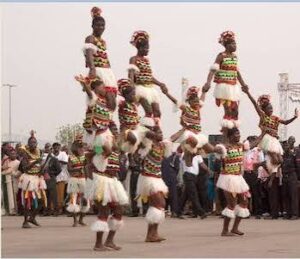
Oral Drama (Ejije Ọdịnala): Masquerade performances (egwu mmanwụ), festival enactments, and traditional storytelling theater.
-
Proverbs and Idioms (Ilu na Akpaalaokwu): Interpreting the philosophical meaning and appropriate usage of Igbo proverbs, riddles (agwụgwa), and tongue twisters (okwu ntụgharị ire).
2. Written Literature (Agụmagụ Ederede)
-
Prose (Iduuazị): Plot structure, setting, themes, characterization, narrative point of view, and stylistic devices in prescribed Igbo novels.
-
Drama (Ejije): Dramatic conflict, dialogue, stage directions, tragedy vs. comedy, and moral lessons in prescribed plays.
-
Poetry (Abụ Ederede): Poetic devices, imagery, rhythm, rhyme, tone, and thematic analysis of selected poems from the prescribed anthology.
“In Igbo literature, proverbs are the palm oil with which words are eaten—expect at least 4 to 6 questions directly testing your ability to complete or interpret traditional ilu.”
Section C: Culture and Customs (Omenala na Ewumewu)
Culture and customs constitute the remaining 20% to 25% of the examination. Questions here evaluate your understanding of Igbo sociology, traditional governance, and belief systems.
-
Family and Kinship (Ezinụlọ na Umunna): Nuclear and extended family structures, lineage (ụmụnna), maternal kindred (ikwunne), and age grades (ọgbọ).
-
Rites of Passage (Emume Ndụ):
-
Birth and naming ceremonies (Ịgụ aha and Ịbị ọmụgwọ).
-
Traditional marriage processes (Ịjụ ajụjụ, Ịkwụ ụgwọ isi nwaanyị, Igba nkwụ nwanyị).
-
Funeral and burial rites (Ịkwa ozu and Ịkpọ okwu).
-
-
Traditional Governance and Law (Ọchịchị Ọdịnala na Iwu): Roles of the Eze/Igwe/Obi, Council of Elders (Ndị Ichie), Ọzọ title holders, Umuada (daughters of the lineage), and masquerade cults (Mmanwụ) in conflict resolution.
-
Hospitality and Social Etiquette: The significance of Kola Nut (Ọjị Igbo), white chalk (Nzu), palm wine (Mmanya ngwọ/nkwụ), and greeting protocols.
-
Igbo Calendar and Economic Life: The four market days (Eke, Orie, Afọ, Nkwọ), traditional farming seasons (Ịkọ ugbo), New Yam Festival (Iri Ji Ọhụrụ), and traditional crafts (blacksmithing, pottery, wood carving).
-
Religion and Cosmology: Supreme Being (Chukwu/Chineke), deities (Alụsị such as Amadịọha, Ala, Anyanwụ), personal guardian spirit (Chi), ancestors (Ndị Ichie), and taboos (Nsọ Ala).
Download Updated Igbo Syllabus
JAMB Igbo Exam Structure and Question Distribution

Understanding how questions are distributed helps you allocate your study time wisely. Below is the standard breakdown of the 40 questions you will encounter on exam day:
other related posts
Official JAMB Recommended Textbooks for Igbo


To supplement the JAMB Igbo PDF, candidates are strongly advised to study from the board’s officially recommended textbooks. These texts align directly with the syllabus questions:
Note: Always verify the specific set of literary texts (Prose, Drama, and Poetry) active for the current UTME cycle on the official JAMB IBASS portal, as JAMB rotates prescribed literature books every few years.
Proven Strategies to Score 85+ in JAMB Igbo


Scoring above 85 out of 100 in UTME Igbo is very achievable if you follow a disciplined preparation routine. Here is how top-scoring candidates prepare:
1. Master the 36 Letters and Vowel Harmony First
Everything in Igbo grammar builds on vowel harmony (ndakọrịta ụdaume). Practice grouping words into Group A (a, ị, ọ, ụ) and Group B (e, i, o, u). Once you master this, spelling errors in the CBT exam drop dramatically.
2. Practice Tone Marking Daily
Do not skip tone marking (udaolu). JAMB loves setting questions where four options have the exact same letters but different tone marks. Train your ear by pronouncing words aloud and identifying whether each syllable goes up (´), goes down (ˋ), or steps down slightly (¯).
3. Memorize Igbo Numerals Up to Millions
Spend 15 minutes every weekend practicing how to write large numbers in Standard Igbo (e.g., 2,540 = Puku abụọ, narị ise na iri anọ). Numeral questions are straightforward once you know the formula, making them guaranteed marks.
4. Read the Prescribed Literature Texts Twice
Do not rely solely on short online summaries for the prescribed novels, plays, and poems. Read the actual texts, underline key characters, note their relationships, and pay attention to figurative language (atụmatụ okwu) such as simile (myiri), metaphor (mbụrụ), and personification (mmadụkwa).
5. Build a Personal Bank of 150+ Igbo Proverbs
Create a dedicated notebook for Ilu Igbo and Akpaalaokwu. Write down each proverb in Igbo, its literal translation, and its philosophical meaning. JAMB frequently gives the first half of a proverb and asks you to select the correct completion.
6. Solve Past Questions Under Timed CBT Conditions
Practice at least 10 years of JAMB Igbo past questions using a CBT simulator. Aim to finish all 40 Igbo questions in 20 to 25 minutes so you have extra time for your other three UTME subjects.
Common Mistakes UTME Candidates Make in Igbo


Even native Igbo speakers fail to reach their target score because of these common pitfalls:
-
Writing in Local Dialects (Olundị): Using Owerri, Nsukka, Onitsha, or Abakaliki dialect spellings instead of Igbo Izugbe (e.g., writing nwoke ahu without the dot under ụ, or using dialectal verb forms).
-
Ignoring Sub-Dots (Kpọm): Forgetting the dot beneath ị, ọ, ụ, and ṅ completely changes the meaning of words (e.g., ọkụ = fire vs. oku = clay bowl).
-
Confusing Oral and Written Literature: Mixing up traditional folktale conventions with modern written prose techniques.
-
Last-Minute Cramming of Numerals: Trying to memorize complex numbers the night before the exam instead of understanding the additive structure of Igbo counting.
-
Neglecting Cultural Terminologies: Failing to learn the specific Igbo terms for marriage stages, burial rites, and traditional titles.
Frequently Asked Questions (FAQs)


1. Is the JAMB Igbo PDF free to download?
Yes. The official JAMB Igbo syllabus PDF is completely free on the JAMB IBASS website. Additionally, Otobor provides free educational guides and study resources to help Nigerian students prepare without financial barriers.
2. Can I use Igbo as a UTME subject for Law or Mass Communication?
Yes, many Nigerian universities accept Igbo as one of the Arts/Social Science subjects alongside Use of English, Literature in English, and Government/CRS for courses like Law, Mass Communication, Linguistics, and Theatre Arts. However, always verify the specific institution’s requirement in the official JAMB brochure.
3. Does JAMB set questions from outside the Igbo syllabus?
No. Every question in the UTME Igbo examination is strictly derived from the topics and recommended texts listed in the official JAMB Igbo PDF syllabus.
4. How many questions are in JAMB Igbo, and how is it scored?
There are 40 multiple-choice questions in JAMB Igbo, carrying 2.5 marks each, totaling 100 marks. Together with your other three subjects (totaling 400 marks), it determines your aggregate UTME score.
5. Where is the main JAMB office in Nigeria located?
The JAMB National Headquarters is located along Suleja Road, Bwari Area Council, Abuja, FCT, Nigeria, with state offices available in all 36 states.

